Explore the UniverseTogether
Join one of Arizona's most active astronomy communities for observing, astrophotography, education, and discovery.
Phoenix has been looking up since 1948. And for nearly eight decades, whenever someone paused to wonder what was shining overhead, a member of this club was there beside a telescope, ready to explain what they were seeing and inspire the next generation of skywatchers.
We're a 501(c)(3) nonprofit of beginners, backyard observers, astrophotographers, and lifelong amateurs. The telescopes are a means to an end; the point is the people around them.
Astronomy Picture of the Day
Courtesy of NASA's Astronomy Picture of the Day.
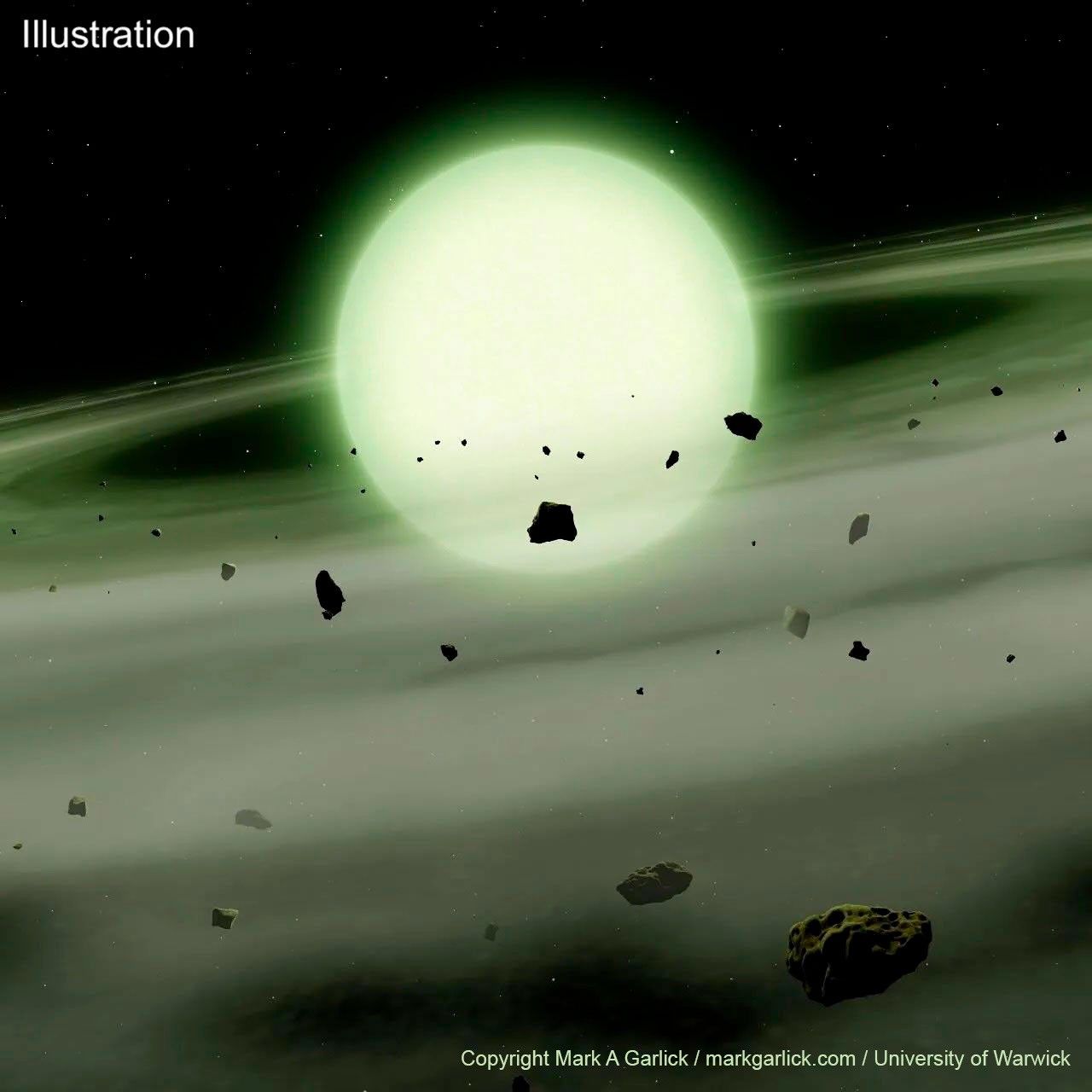
The First Green Star, WD J1330+6435
Explanation: Star light, star bright: is there a green star out tonight? Other than the Sun, all stars are so far from Earth that they appear as points in the sky. They are mostly white, but sometimes noticeably red or blue. This color typically relates to the temperature: blue stars are hotter than red stars. What about other colors? The featured image is an illustration showing WD J1330+6435, a white dwarf star, surrounded by an accretion disk with gas and rocks orbiting the star. White dwarfs are small, faint stars that are left over when a star like the Sun exhausts its nuclear fuel. Astronomers recently found that some white dwarf stars, despite their name, would appear yellow, green, cyan, pink, or purple. In these cases, trace elements that were accreted to these stars interact with the stellar atmosphere and shift its normally white color. But, alas! I wish I may, I wish I might, but they are too faint to see tonight... Tomorrow's picture: eye in the sky
Read the full description on APOD ↗© Mark A. Garlick, University of Warwick, Robert Nemiroff (MTU), Jerry Bonnell (UMCP)
What Our Members See
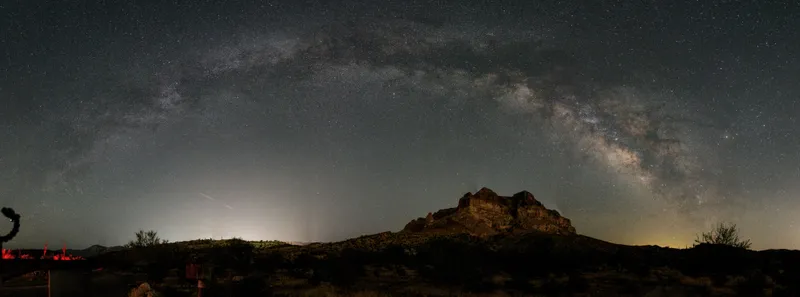
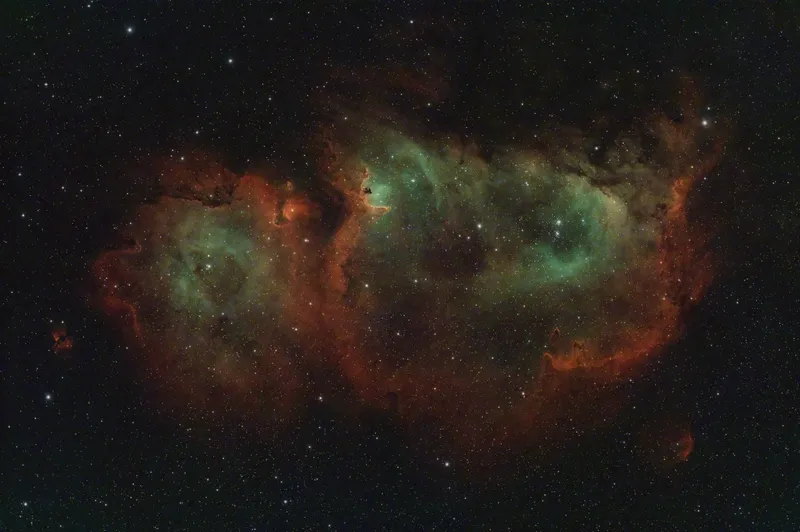
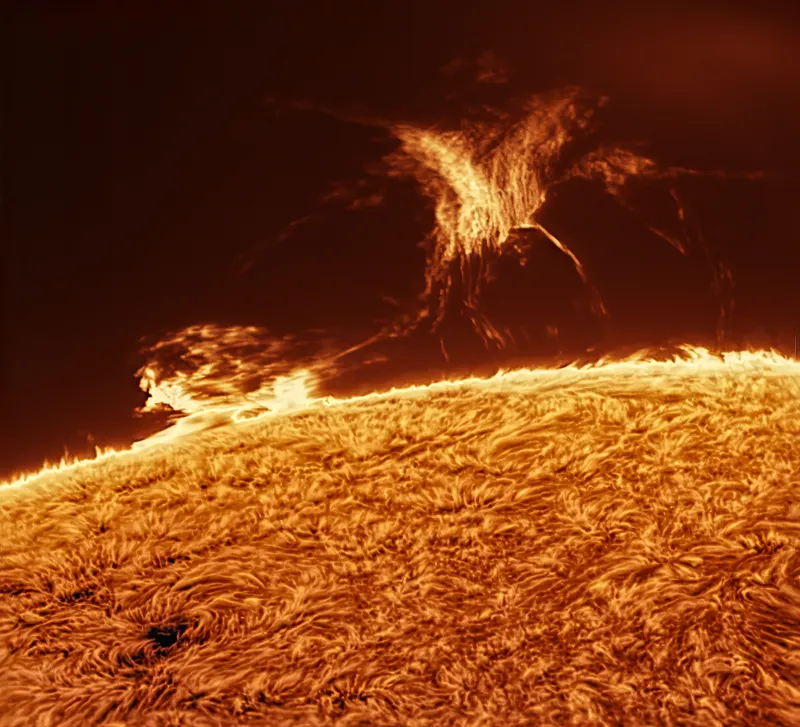
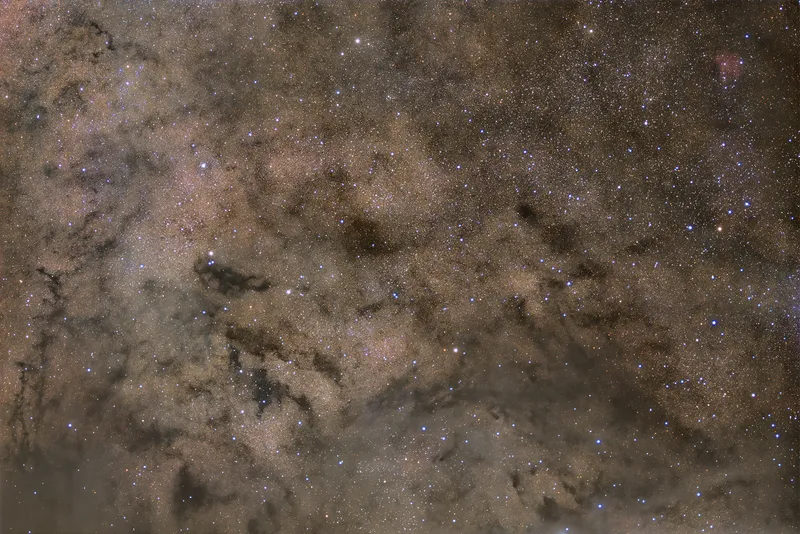
NASA isn't the only one with a picture of the day — PAS members shoot the Milky Way, nebulae, and the Sun from right here in Arizona.
Upcoming Events
Meetings, star parties, and workshops happen regularly throughout the year.
Monthly Meeting
Our Lecture Series meeting, with a guest speaker and club updates.
Public Star Party
Free, open-air observing — bring your own gear or just look through ours.
Telescope Workshop
Can't find anything in your telescope? Bring it and we'll help.
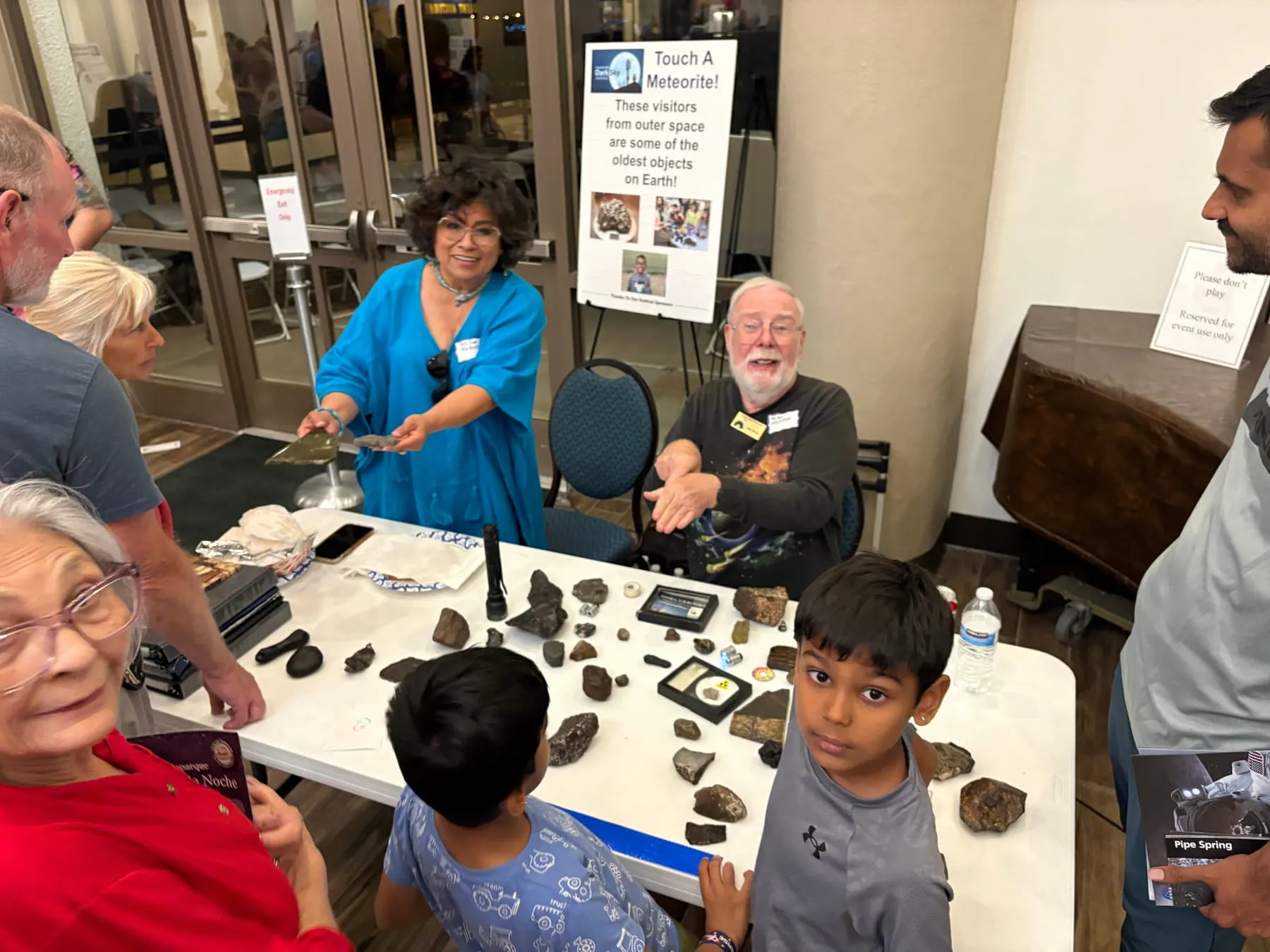
A PAS Star Tour is more than a look through a telescope—it's a guided journey through the night sky.
Every telescope is staffed by a knowledgeable PAS volunteer who helps visitors discover planets, galaxies, nebulae, and star clusters while explaining what they're seeing. If clouds roll in, our meteorites, displays, and presenters ensure there's still plenty to explore and enjoy.
Bring PAS to Your GroupWhy Join PAS
Concrete reasons members stick around — not just a meeting on the calendar.
Public Star Parties
Free, open-to-the-public observing nights — a welcoming first stop for beginners of any age. No telescope, no experience, and no membership required: turn up, get in line at an eyepiece, and let a member walk you across the sky.
Monthly Lecture Series
Guest speakers and member talks covering observing, astrophotography, and the latest research.
Telescope Workshops
Free, hands-on help choosing, setting up, and getting the most out of your own telescope.
Star Tours Outreach
Bring PAS telescopes and presenters to your school, scout troop, or community group.
Group Trips
Members-only excursions, like private tours of Lowell Observatory in Flagstaff.
A Club Since 1948
Nearly eight decades of bringing Arizona’s skies to students, families, and lifelong astronomers.
Special Interest Groups
Smaller member-run groups that go deep on one corner of the hobby, meeting outside the main monthly calendar.
Astro Imaging Special Interest Group (ASIG)
Learn, practice, and master astronomical imaging — from a first smart-telescope shot of the Moon to multi-night deep-sky mosaics. Meets the 4th Monday of every month, 7:00 pm, at PVCC.
Book(s) Special Interest Group (BSIG)
The Astronomy Book Club — exploring the best books on space, cosmology, and planetary science, then meeting to talk them over. No scientific background required.
PAS membership is required to take part in a special interest group.